The Current State of Theme Parks in America: Growth, Challenges, and What’s Next

America’s theme park industry is entering a new chapter.
For decades, theme parks have been more than destinations for roller coasters and family entertainment. They have become major tourism engines, real estate catalysts, hospitality hubs, employment centers, and increasingly sophisticated forms of immersive storytelling.
The industry is growing—but that growth is uneven.
Major destination operators such as Disney and Universal are investing billions of dollars into new attractions, resorts, technology, and experiences, while regional operators are facing tougher competition, changing consumer behavior, rising operating costs, and pressure to reinvent aging properties.
So, where does the American theme park industry stand today—and where is it headed next?
A Growing Industry With a Changing Landscape
The long-term trajectory of the U.S. amusement and theme park industry remains impressive.
According to the U.S. Bureau of Labor Statistics, the number of amusement and theme parks in the United States increased from 890 in 2013 to 1,273 in 2023, representing a 43% increase over the decade. The broader amusements, gambling, and recreation industries generated approximately $236.8 billion in economic output in 2023.
Growth in U.S. amusement and theme parks
The opportunity, therefore, is not disappearing. Instead, the definition of a successful theme park is changing.
The Rise of the Destination Theme Park
One of the clearest trends is the increasing importance of the destination resort model.
Disney and Universal are no longer competing simply on individual rides. They are competing for entire vacations.
Hotels, restaurants, shopping districts, water parks, entertainment venues, transportation, character experiences, seasonal events and immersive lands all contribute to a larger ecosystem.
Universal’s opening of Epic Universe in Orlando in May 2025 demonstrated the scale of this strategy. Universal describes the park as its most technologically advanced theme park to date, and the company says the first year helped generate significant tourism and employment activity in Central Florida.
Universal is also expanding beyond Orlando. In 2026, Universal Kids Resort opened in Frisco, Texas, targeting families with younger children, while Universal Studios Hollywood is introducing new attractions and technology.
The message is clear:
The next generation of theme parks will increasingly be destinations rather than single-day attractions.

Disney’s Strategy: Experience, Pricing and Expansion
Disney remains one of the most powerful forces in the industry.
The company has been investing heavily in its Experiences business, while also experimenting with pricing, promotions, seasonal programming and new attractions to maintain demand.
In 2026, Disney’s domestic parks demonstrated an important lesson: consumers may respond strongly when value is perceived to improve.
Recent reporting indicated that Disney’s U.S. theme park attendance increased during the 2026 summer season while the company used promotions and discounts to attract families. At the same time, per-capita guest spending continued to rise.
That combination—more guests while maintaining spending per visitor—is particularly important.
The future may not simply be about charging more. It may be about creating enough value that consumers are willing to spend more across the entire vacation.
The Challenge Facing Regional Parks
While destination parks are investing heavily, regional amusement parks face a different reality.
Six Flags’ 2026 results illustrate the challenge. In the second quarter, reported attendance declined 7% year over year, although same-park attendance increased 4% and per-capita
spending increased 1%. The company has also been focusing its portfolio on parks it considers to have stronger potential.
United Parks & Resorts, which operates brands including SeaWorld and Busch Gardens, reported a 2.9% decline in second-quarter attendance in 2026. However, in-park per-capita spending increased 5.1%, reaching a record $39.51.
This tells us something important about the industry: Attendance isn’t the only measure of success anymore.
Operators are increasingly focused on:
Revenue per guest
Memberships and season passes
Food and beverage
Merchandise
Premium experiences
Hotels
Special events
Dynamic pricing
Guest loyalty
The goal is to generate greater economic value from each visitor.
Affordability Is Becoming a Major Issue
Perhaps the biggest question facing the industry is affordability. Theme park vacations can involve far more than admission.
Park tickets
Hotels
Airfare or gasoline
Parking
Food
Merchandise
Express or premium access
Special events
Transportation
When inflation and travel costs rise, a theme park vacation can become a major financial commitment.
This creates a delicate balance for operators.
Raise prices too aggressively, and middle-income families may decide the experience is no longer affordable.
Keep prices too low, however, and operators may struggle to fund the massive investments required to build new attractions and maintain aging infrastructure.
The challenge is therefore not simply: “How much can we charge?”
It is: “How much value can we create for what guests are willing to spend?”
Technology Is Changing the Guest Experience
The future of theme parks will also be heavily influenced by technology.
The modern guest increasingly expects a seamless digital experience—from purchasing tickets to navigating the park, ordering food, reserving experiences and interacting with attractions.
But technology is becoming much more than an operational tool. It is becoming part of the storytelling.
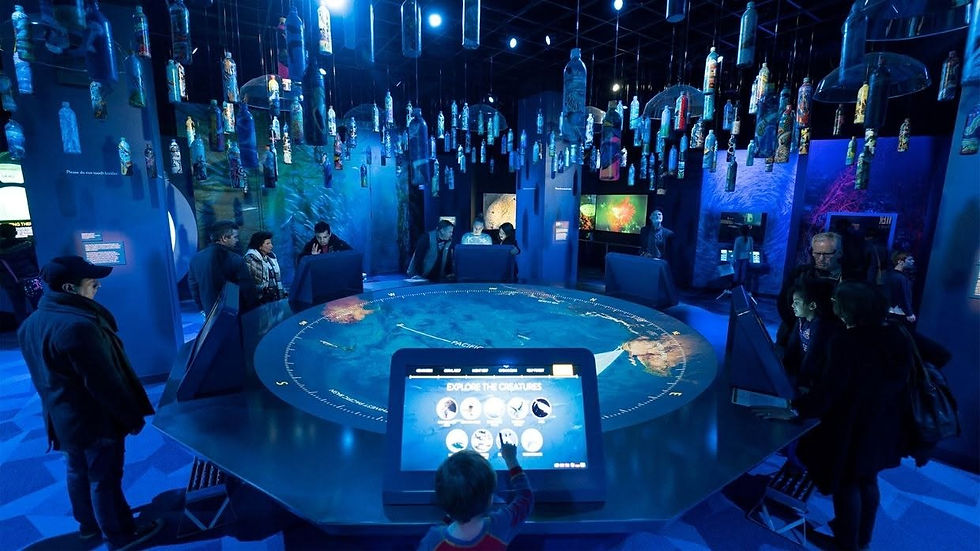
Virtual reality, augmented reality, artificial intelligence, interactive environments, wearable technology, advanced animatronics, projection mapping and personalized digital experiences can transform passive visitors into active participants.
The objective is no longer simply to build a roller coaster. It is to build a story world.
That distinction will become increasingly important as consumers compare theme parks with video games, streaming platforms, social media and other entertainment options.
Competition for Attention Is Getting Tougher
Theme parks are competing against more than other theme parks. Today’s consumer has an enormous number of entertainment choices. Families can spend their money on:
Streaming services
Video games
Concerts
Sporting events
Cruises
International travel
Local attractions
Youth sports
Museums
Shopping and entertainment districts
At-home experiences
Regional parks in particular are feeling this pressure. Analysts have pointed to competition from alternative entertainment as one factor contributing to challenges facing traditional regional parks.
A successful park therefore has to answer a bigger question:
Why should someone leave home and spend hundreds—or thousands—of dollars to visit us?
The answer must be emotional.
Climate and Weather Are Also Industry Risks
Theme parks are highly dependent on weather.
Extreme heat, hurricanes, storms and unpredictable seasonal patterns can affect attendance, operations and guest satisfaction.
This is especially important for parks in Florida, Texas and other warm-weather markets. Climate resilience will increasingly become part of theme park development.
Future parks may need:
More indoor attractions
Shaded pedestrian environments
Advanced cooling systems
Water features
Weather-resistant entertainment
Flexible operating schedules
Better emergency planning
More climate-resilient infrastructure
In other words, climate adaptation may become a core component of theme park design.
The Opportunity Beyond Orlando and California
One of the most exciting opportunities is geographic expansion.
Orlando and Southern California remain dominant theme park markets, but there is enormous potential for destination entertainment elsewhere.
Texas is already attracting major investment. Universal’s expansion into Frisco demonstrates the potential of the Texas market.
Other regions could potentially support new models built around:
Theme parks + resorts + retail + restaurants + sports + entertainment + residential development.
This is where theme parks intersect with real estate development.
A major theme park can generate demand for hotels, housing, restaurants, retail, transportation infrastructure and commercial development.
That makes a theme park potentially more than an entertainment project.
It can become an economic-development strategy.
The Next Generation of Theme Parks
So what comes next?
I believe the next generation of American theme parks will be defined by six major trends.
Immersive storytelling
Guests will increasingly enter fully developed worlds rather than simply ride attractions.
Mixed-use development
Theme parks will increasingly connect with hotels, restaurants, retail, entertainment, residential communities and convention facilities.
Technology-driven experiences
AI, augmented reality, advanced animatronics and interactive environments will become more integrated into attractions.
Family affordability
Operators will have to find new ways to make experiences accessible without sacrificing profitability.
Regional reinvention
Older parks will need to modernize, reposition themselves and create experiences that cannot easily be replicated elsewhere.
New markets
The next major theme park developments may emerge outside the traditional Florida and California markets.
What This Means for Developers
For real estate developers, investors and municipalities, the theme park industry presents a particularly interesting opportunity.
A successful theme park can function as an anchor development.
Imagine a project where the theme park is only one component of a much larger destination:
Theme Park → Resort → Hotels → Restaurants → Retail → Entertainment → Sports → Residential → Commercial Development
This creates multiple revenue streams and can extend visitor stays from a few hours to several days.
It can also create jobs, increase tourism, expand the local tax base and stimulate surrounding development.
That model could be especially compelling for communities looking to diversify their local economies.

The Future Will Belong to Experiences
The American theme park industry is not disappearing. It is evolving.
The data shows long-term growth in the number of parks, while current market conditions demonstrate that success is increasingly concentrated among operators capable of investing, innovating and adapting.
The winners of the next decade will likely not be the companies that simply build the biggest roller coaster.
They will be the companies that understand experience economics.
They will know how to combine entertainment, technology, hospitality, real estate, storytelling, food, retail and community development into one destination.
And perhaps most importantly, they will understand that people are not simply buying a ticket.
They are buying a memory.
The future of America’s theme parks will therefore be about much more than rides.
It will be about creating places people want to visit, places they want to return to, and places that can transform the economic landscape around them.
The next great American theme park may not simply be a park. It may be an entire destination—and potentially an entire community built around the experience.
Comments